Graphic Organizer for Reading a Personal Narrative
I recall all teachers would agree that teaching writing is a grueling procedure. Narrative writing, in item, is tough because it involves many dissimilar components. Whether students are writing a personal narrative or a fictional narrative, it is critical that they larn to correctly construct their writing in a fashion that highlights their storyline. Flowing through the elements of plot, character, and dialogue can quickly go overwhelming. In order to ease the feelings of overwhelm, I similar to utilize graphic organizers throughout the entire writing process. That mode, students get a visual representation for each component of their narrative. Each organizer and the specific order of implementation is detailed beneath.
Narrative Concept Map
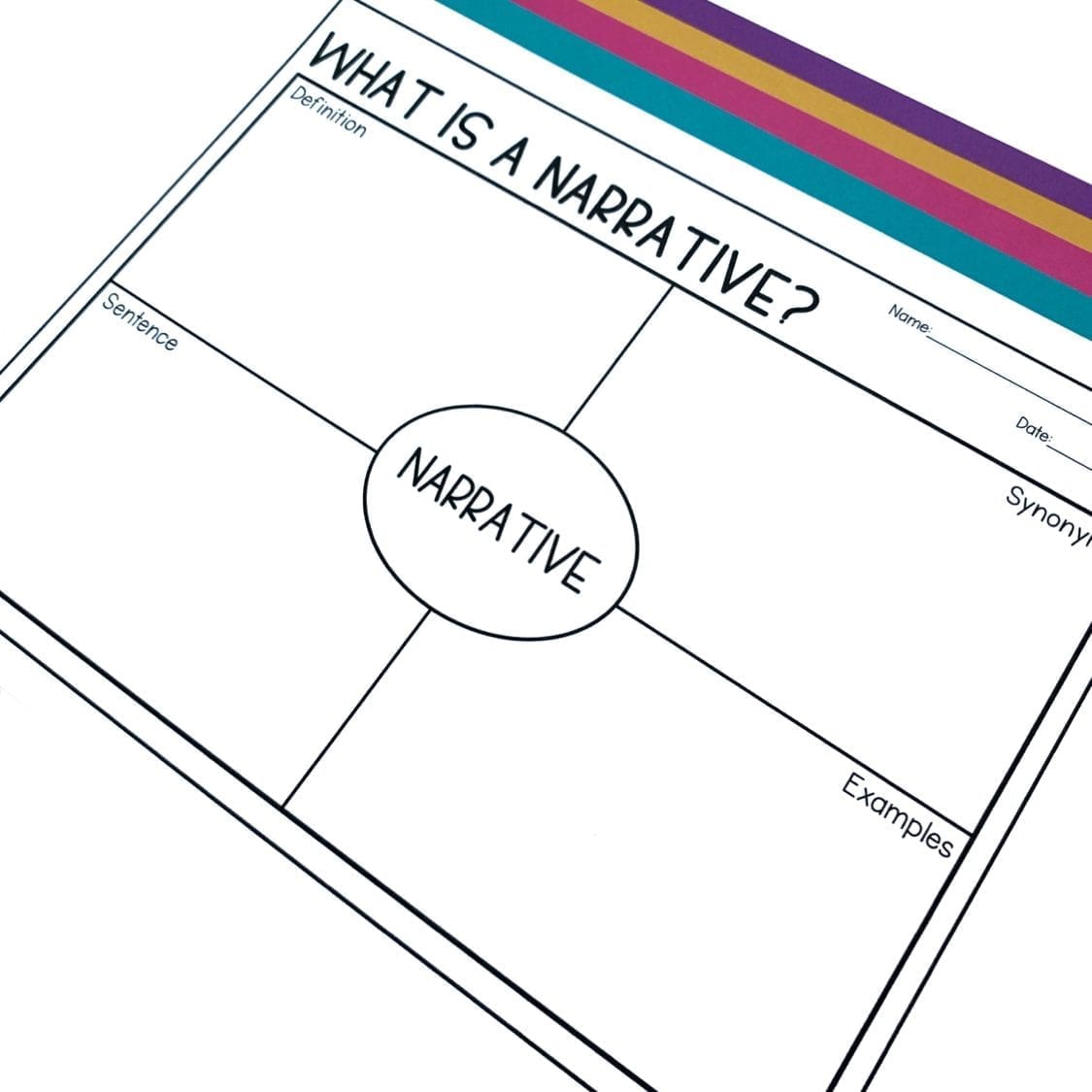
It might exist obvious, but starting the teaching procedure by defining the term "narrative" is disquisitional. Of course, students know what stories are, but the word narrative might be new to them. The concept map provides a space to record the definition, add together synonyms, construct an original sentence, and develop concrete examples. If done well, students will showtime the writing procedure with a strong understanding of the expectations for narrative writing.
Theme Concept Map
The adjacent graphic organizer is focused on the concept of theme . In order for students to first thinking well-nigh possible themes ahead of fourth dimension, I like to complete information technology with students before they showtime writing. If students are clear on their theme, their stories tend to have more than depth and meaning. The theme organizer is similar to the narrative organizer outlined in a higher place. Students write the definition, provide a synonym or two, write an original sentence, so generate theme examples from familiar stories they take read in the past.
Plot Terms Concept Map
Information technology is difficult to write a narrative without a basic understanding of plot. The ability to differentiate and sympathise the elements of plot is necessary for crafting an constructive story. Using a concept map to ascertain each term will help students when information technology comes time to construct each part of their story. Each element of the plot serves a specific purpose, which will hopefully exist clear to students later on they take completed the concept map for each term.
Literary Devices Concept Map
I like to spend a bit more time teaching students about the different literary devices they might want to include in their narratives. Typically, I focus on one device at a time, possibly even creating a separate lesson plan for each one. The graphic organizer is squeamish considering students can refer back to it when writing their narratives. I like to require students to use three examples of literary devices in their story, which makes this graphic organizer a groovy point of reference later on in the writing procedure.
Grapheme Traits Bubble Map
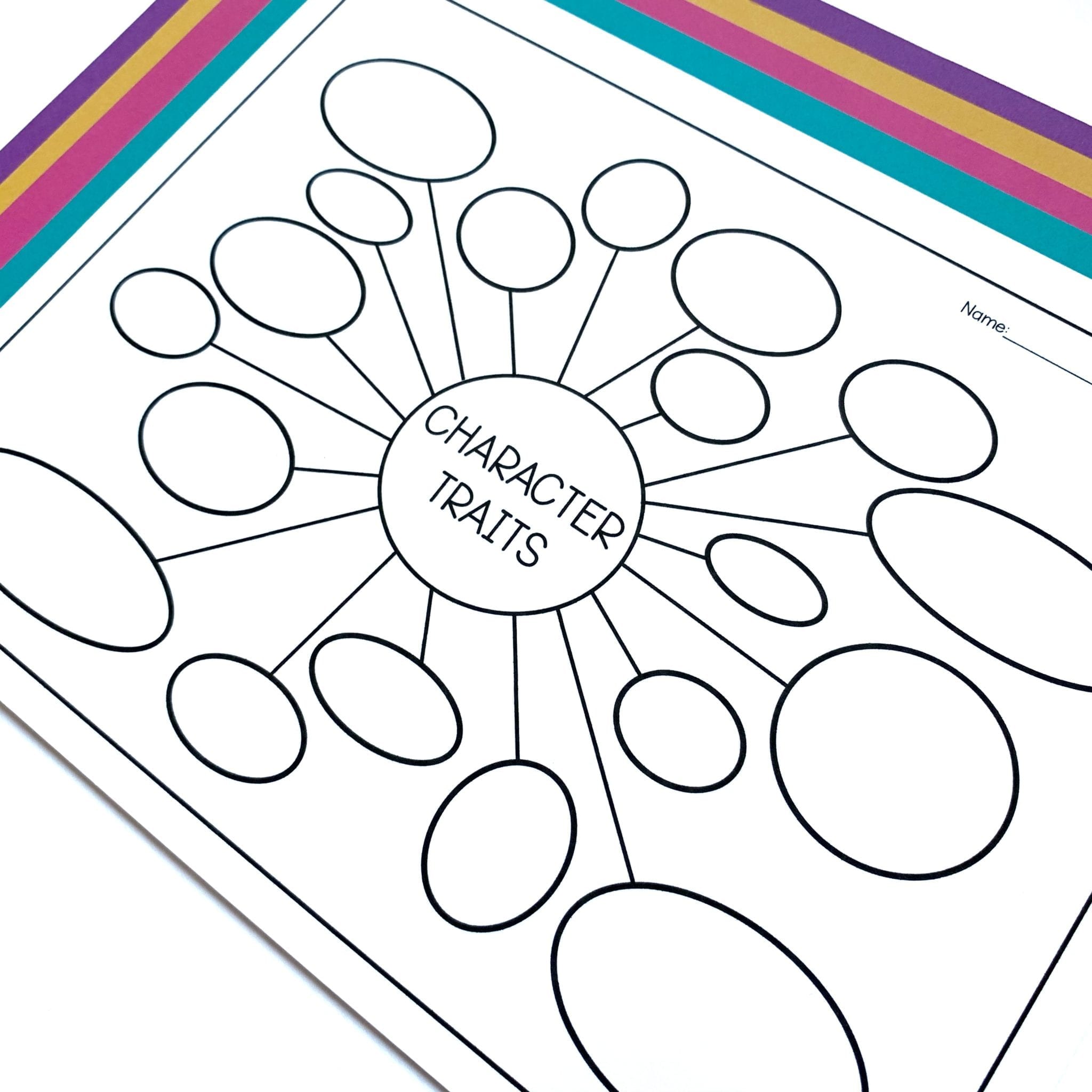
Brainstorming grapheme traits is ever fun because information technology gives students a take a chance to think about their favorite fictional characters and the specific traits those characters possess. Filling up the chimera map also gives students a great deal of inspiration to work with when it's time for them to start constructing characters of their own.
Character Maps
The character maps provide students with space to swoop deeper into character creation. It forces them to think about each character's physical description, actions, feelings, and thoughts. Without the character maps, students run the risk of creating flat characters. Taking the time to create deep and meaningful characters is an integral part of crafting a narrative.
Transition Words Bubble Map
Teaching students to incorporate different transition words into their narratives is so important. Transition words are extremely helpful for the reader to exist able to follow along and keep pace with the narrative. Without them, the story might feel jumpy and disconnected. Providing the reader with transition words, helps them understand how the ideas flow together. Like the literacy devices map described above, the transition words bubble map works well as a reference tool when students brainstorm writing their narratives.
Types of Characters Double Bubble Map
Comparison and contrasting grapheme types will give students a stronger foundation for developing their own characters. It is of import for students to know the divergence between static characters and dynamic characters, not only for writing purposes, but for reading comprehension also. Your students might be creating both types of characters, but not know the terms used to define each blazon. The double bubble map helps to reinforce this concept.
Types of Conflict Double Bubble Map
Delving into the different types of conflict is as well something I similar to do before students first writing their narratives. Conflict is a major component of all narratives, so I want to brand sure students are extremely clear on the type of disharmonize they are presenting in their own story. Nosotros take the fourth dimension to compare and contrast both conflict types and look at examples of each. In my experience, external conflicts are more popular with fictional narratives, and internal conflicts are more popular with personal narratives. That being said, both work well in either scenario.

Tone vs. Mood Double Bubble Map
Perhaps the most difficult literary concept for students to understand is the divergence between tone and mood. I like to dedicate time for a stand-alone lesson on creating and utilizing tone and mood. Overall, my goal is for students to have a general agreement of tone and mood, so they tin successfully apply both to their own stories.
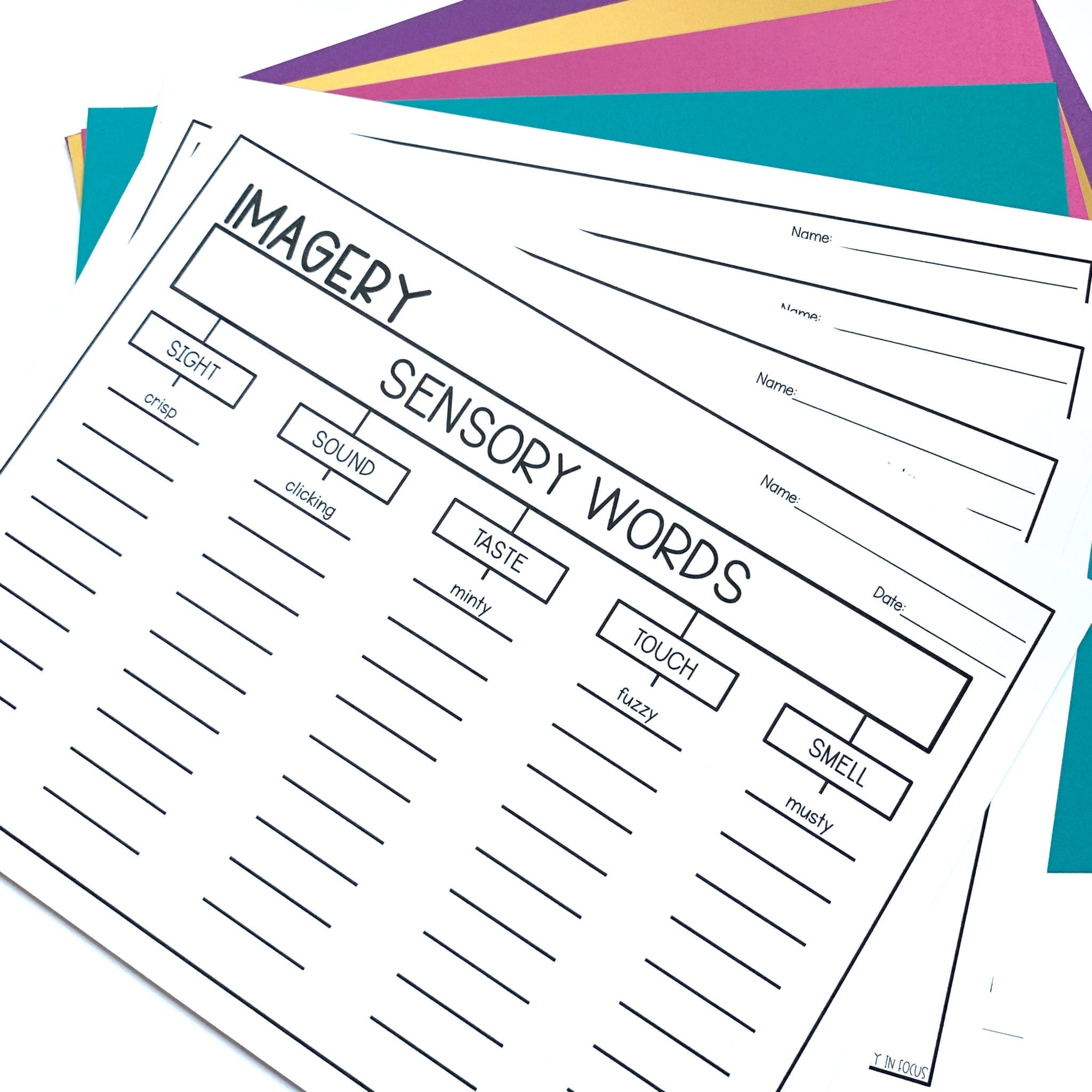
Sensory Words Tree Map
I love teaching imagery! The sensory words tree map encourages imagination and gives students a take chances to go creative with their writing. We start the tree map together as a class, and students stop on their ain. I like to teaching students to utilise sensory details by describing their favorite meal. Food is something that usually appeals to all five senses. When information technology's time for students to add imagery to their ain stories, they just demand to think back to how they described their favorite repast. They tin can likewise look back to their completed tree map for additional ideas.
Figurative Language Tree Map
Figurative language is a concept that is weaved throughout the entire school year. I use the tree map to focus on the most mutual types of figurative language, and the devices that students are nearly probable going to add to their stories. Nosotros piece of work together to ascertain and add an instance for each type of figurative language. The tree map works well equally a quick review and every bit a place for students to refer dorsum to when they are looking to add together figurative language to their narrative.
Bespeak of View Tree Map
Agreement the differences in point of view is an important part of narrative writing. If students are writing a personal narrative, they will most likely exist writing in first person. On the other hand, if students are writing a fictional narrative, they will most likely be writing in 3rd person. While understanding the differences in point of view can exist catchy, most students will naturally gravitate to the right use of point of view for their particular story.
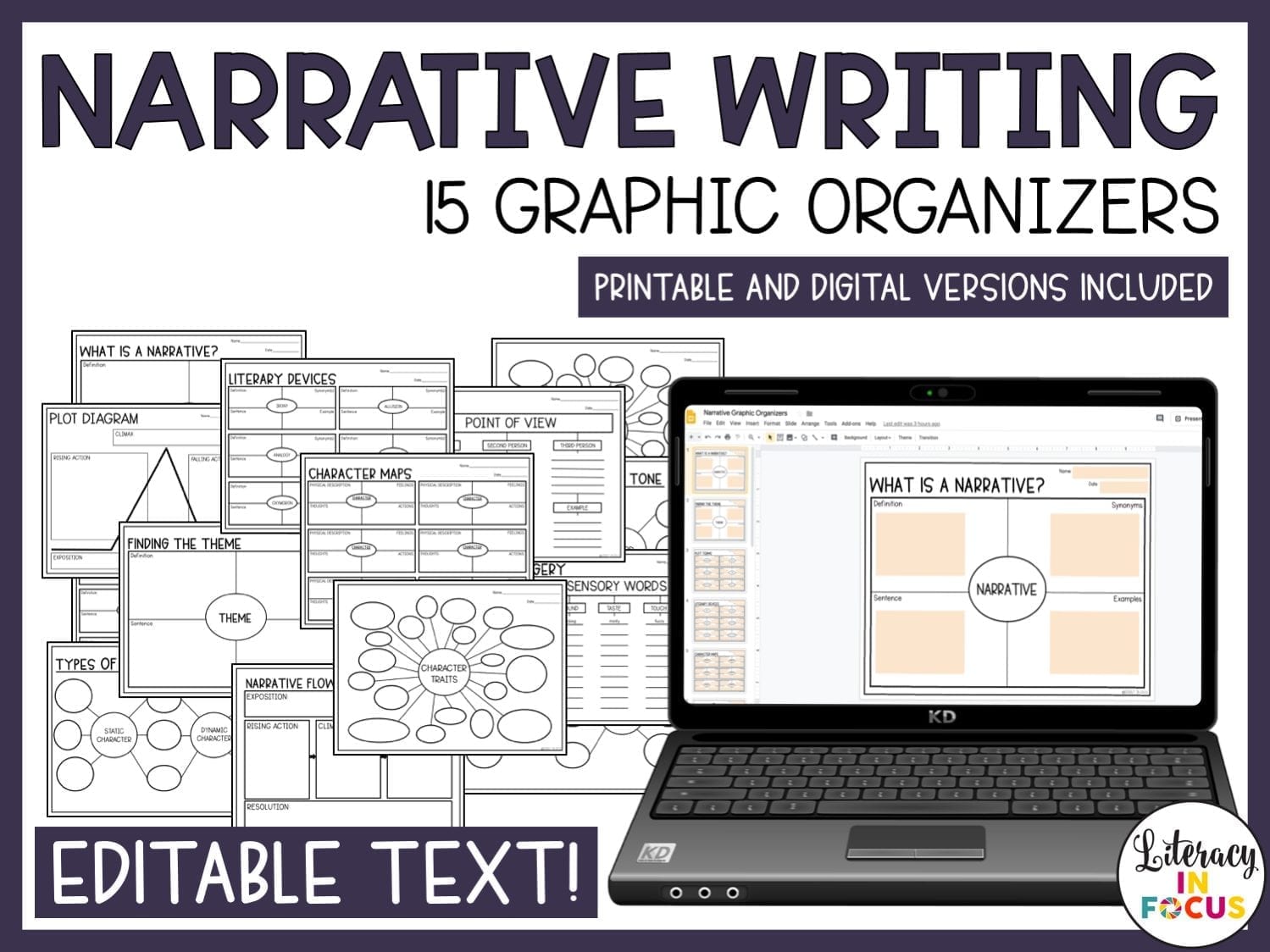
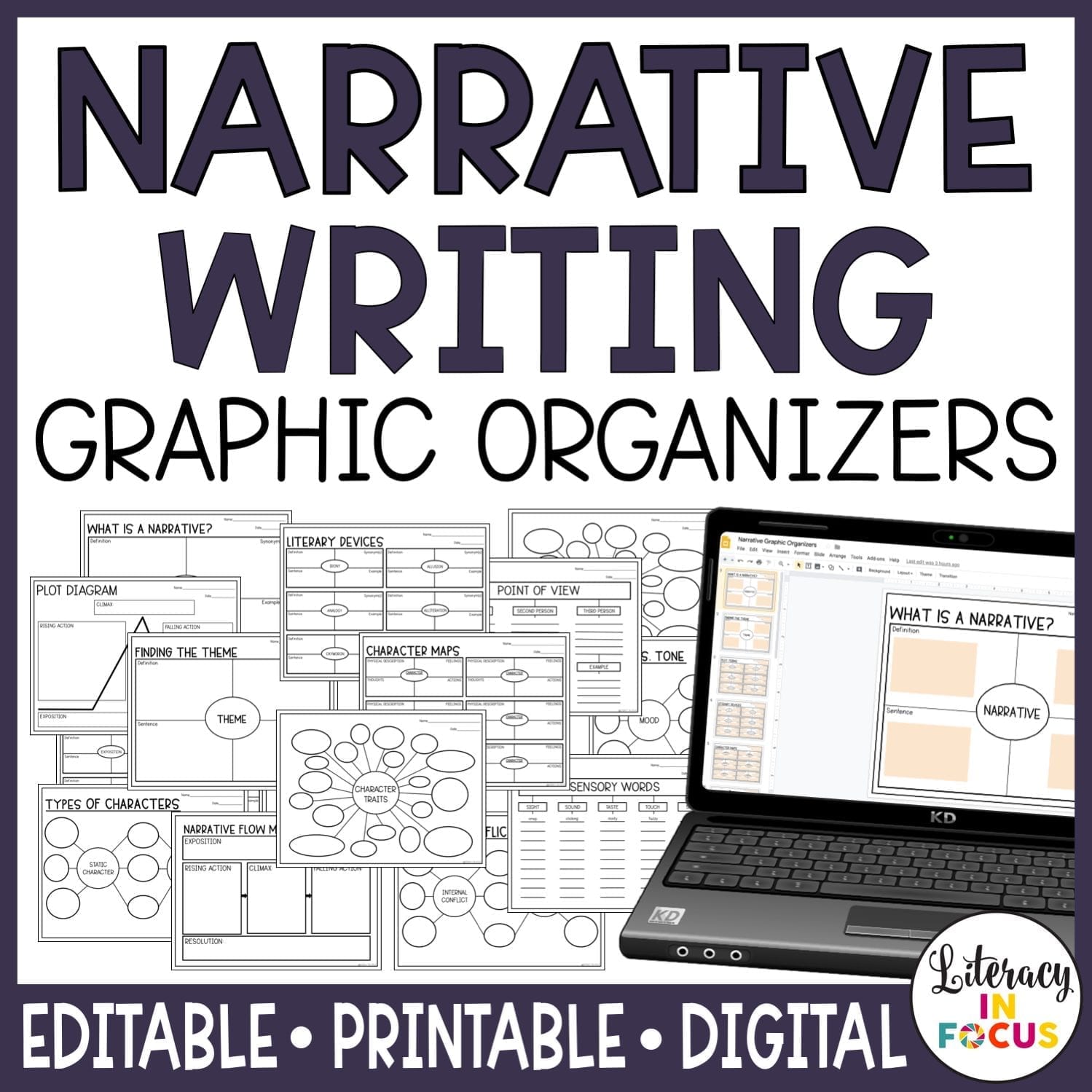
Click hither to download all fifteen Narrative Graphic Organizers from Literacy in Focus on TpT.
Narrative Flow Map
The narrative flow map presents a different way of diagraming the plot. It is essential that students work through each chemical element of their story earlier they start writing. Otherwise, the narrative may contain unnecessary elements or skip over critical components that are needed for a cohesive storyline. The narrative catamenia map is a manner for students to ensure that their story is complete and contains all necessary elements.
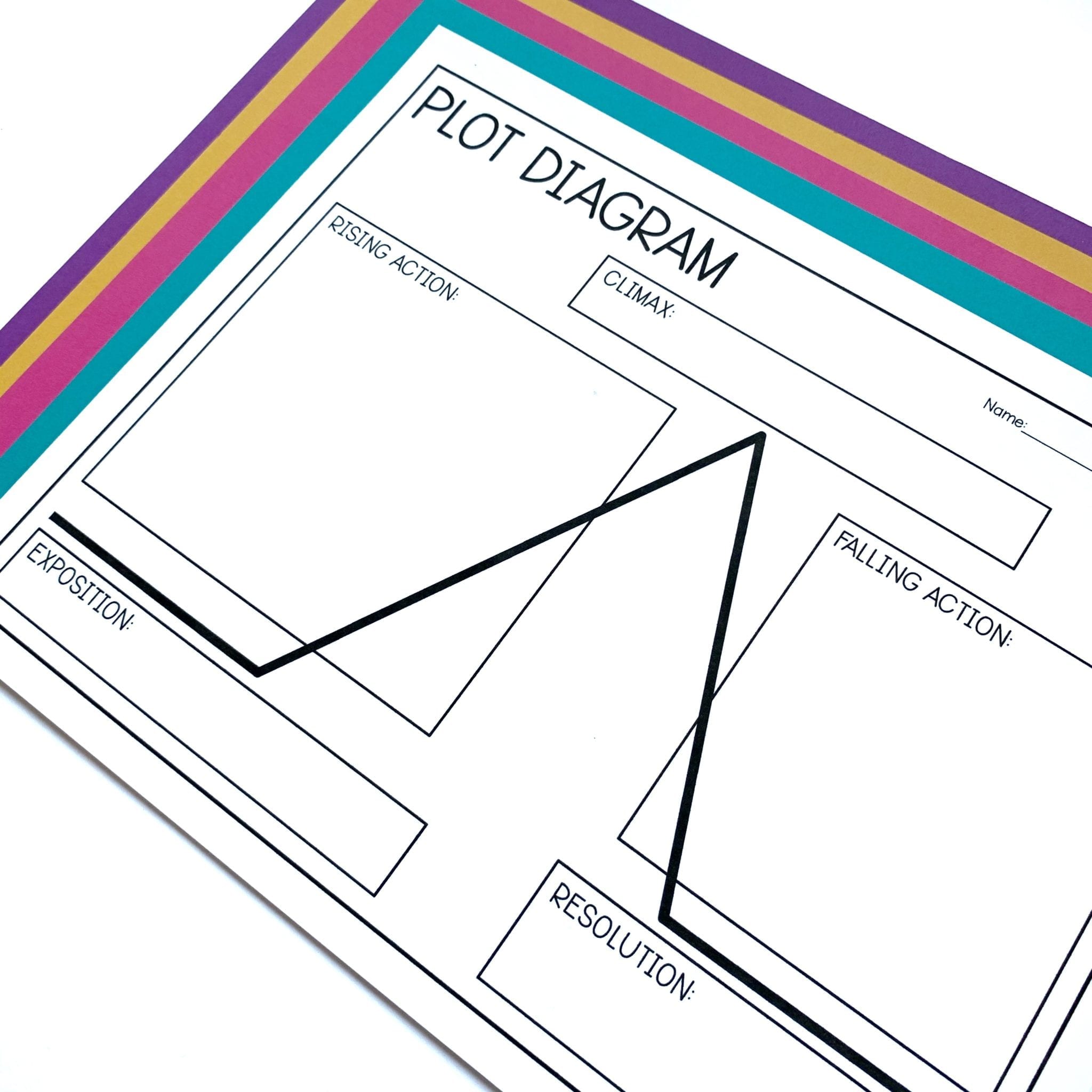
Plot Diagram
Most students will be familiar with a plot diagram. Like the narrative flow map, the plot diagram ensures that students add together all the necessary story elements to their narratives. The plot diagram too serves as a great storytelling visual. Students tin can run across how their story begins with the exposition, takes the reader up with the rising action, peaks at the climax, brings the reader back down with the falling action, and ties upwards all loose ends with the resolution.
Teaching students how to write a narrative doesn't have to be difficult! You tin selection and choose your favorite graphic organizers to use, or, if y'all take fourth dimension, you can use all xv! If yous are interested in downloading all fifteen graphic organizers, click here to visit Literacy in Focus on TpT , and make them yours today! All of the narrative organizers are printable and digital, making it like shooting fish in a barrel for you to implement with or without technology!
"Very straightforward and like shooting fish in a barrel to incorporate into my narrative writing unit of measurement. The digital copies were great for students who need technology to assist with writing." -Andrew M
Source: https://www.litinfocus.com/15-graphic-organizers-for-narrative-writing/
Post a Comment for "Graphic Organizer for Reading a Personal Narrative"